Can You Leave A Puppy Home Alone For 8 Hours | What Every Owner Must Know
One of the most common questions new puppy owners ask is: Can You Leave A Puppy Home Alone For 8 Hours? The short and honest answer is: for most puppies, no—8 hours is too long. While adult dogs may sometimes manage a full workday alone, puppies have very different physical and emotional needs.
Leaving a puppy alone for too long can lead to accidents, stress, behavioral problems, and even long-term anxiety issues.
In this guide, we’ll break down why 8 hours is difficult for puppies, what actually happens when they are left alone that long, and what you can do if you work full-time or have a busy schedule.
Why 8 Hours Is Too Long for Most Puppies:
Puppies are still developing in every way—physically, mentally, and emotionally. Unlike adult dogs, they cannot regulate their bodies or emotions for long periods.
Here are the main reasons 8 hours is usually too long:
- Small bladder capacity
- Need for frequent feeding
- High energy levels
- Emotional dependency on humans
- Ongoing potty training needs
Even if a puppy “survives” 8 hours alone, it does not mean it is healthy or safe for them.
Puppy Age Matters a Lot:
Whether 8 hours is possible depends heavily on age.
🐶 8–10 weeks old
- Can only stay alone for 1 hour or less
- Need constant supervision
- Require frequent potty breaks
🐶 10–12 weeks old
- Can manage about 1–2 hours
- Still very dependent
🐶 3–4 months old
- Around 3–4 hours maximum
- Still not suitable for full workdays
🐶 5–6 months old
- May handle 4–6 hours occasionally
🐶 6+ months old
- Some puppies may handle 6–8 hours with training, but not all
So even older puppies are not guaranteed to manage 8 hours comfortably.
What Happens If You Leave a Puppy Alone for 8 Hours?
Leaving a puppy alone for a full workday can lead to several issues.
1. Bathroom Accidents Are Almost Certain
Puppies have very small bladders.
After a few hours:
- They cannot hold urine
- They will eliminate indoors
- This can slow down potty training
Even if they are crate trained, 8 hours is too long for most puppies to hold it comfortably.
2. Separation Anxiety Can Develop
Puppies are social animals.
When left alone too long, they may develop:
- Crying or whining
- Barking for long periods
- Panic when you leave
- Clinginess when you return
If this continues, it can turn into long-term separation anxiety.
3. Destructive Behavior Increases
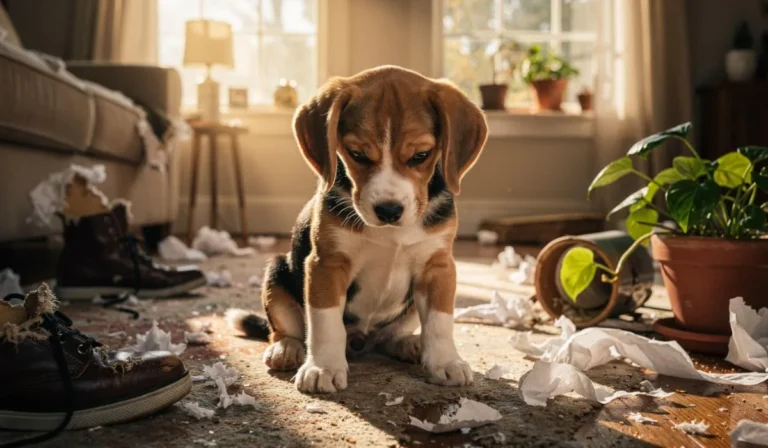
Bored puppies often turn to chewing and destruction.
They may chew:
- Furniture
- Shoes
- Cables
- Walls or doors
This is not “bad behavior”—it is boredom and stress combined with natural chewing instincts.
Read Next: How To Pet Insurance
4. Emotional Stress and Fear
Eight hours alone can feel like a very long time for a puppy.
They may experience:
- Anxiety
- Confusion
- Loneliness
- Restlessness
Over time, this can affect their personality and confidence.
5. Interrupted Training Progress
Puppies need consistency to learn:
- Potty training
- Basic commands
- Social behavior
Long gaps without guidance can slow learning and create bad habits.
6. Risk of Health and Safety Issues
Without supervision:
- Puppies may chew dangerous items
- Injuries may go unnoticed
- Stress-related sickness may occur
Even a safe home has hidden risks for a curious puppy.
Are There Any Puppies That Can Handle 8 Hours?
Some older puppies (usually 6–12 months) may handle 8 hours, but only if:
- They are well-trained
- They are used to being alone gradually
- They have a safe environment
- They have no medical or behavioral issues
Even then, it should not be an everyday routine.
Most veterinarians and trainers recommend no more than 4–6 hours for puppies, even in ideal conditions.
Why Adult Dogs Are Different?
Adult dogs are more independent because:
- They have better bladder control
- They understand routines
- They are emotionally more stable
- They are fully trained
But puppies are still learning all of this, which is why they need much more attention.
What If You Work 8 Hours a Day?
Many puppy owners face this exact situation. The good news is there are safe solutions.
1. Midday Pet Sitter Visit
A pet sitter can:
- Let the puppy out
- Provide food and water
- Give playtime and attention
This breaks up the long isolation period.
2. Puppy Daycare
Dog daycare provides:
- Supervised care
- Social interaction
- Exercise and play
- Structured routine
This is one of the best options for full-time workers.
3. Family or Friend Help
Someone trusted can:
- Check in during the day
- Take the puppy outside
- Provide companionship
Even one visit can make a big difference.
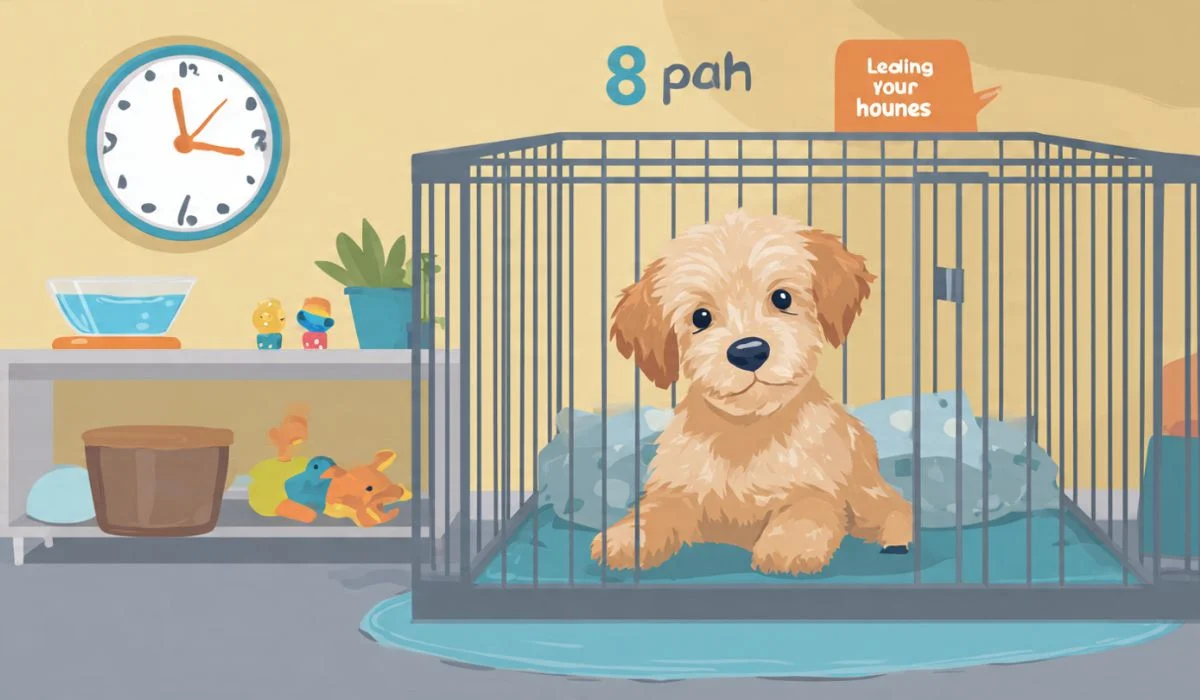
4. Crate Training (Used Properly)
A crate can help:
- Keep the puppy safe
- Support potty training
- Prevent destructive behavior
But it should NEVER be used for 8 hours straight.
5. Puppy-Proofed Room Setup
If crate training isn’t suitable:
- Use a safe room
- Remove dangerous items
- Provide water and toys
- Use pee pads if needed
How to Train a Puppy to Be Alone Safely:
If you want your puppy to eventually handle longer alone time, training is essential.
Step 1: Start Small
Begin with:
- 5–10 minutes alone
- Gradually increase time
Step 2: Stay Calm When Leaving
Avoid emotional goodbyes. Keep departures neutral.
Step 3: Reward Calm Behavior
When your puppy stays calm alone:
- Give treats
- Offer praise
Step 4: Provide Mental Stimulation
Use:
- Chew toys
- Puzzle feeders
- Safe toys
Step 5: Build a Routine
Puppies feel safer with structure:
- Same feeding times
- Same potty schedule
- Regular playtime
Warning Signs Your Puppy Is Alone Too Long:
Watch for:
- Constant barking or crying
- Accidents every day
- Chewed furniture or doors
- Over-excitement when you return
- Refusing food when alone
These signs mean your puppy needs more care during the day.
Emotional Reality of Leaving Puppies Alone:
It’s important to understand that puppies don’t just “wait” quietly.
For them, 8 hours can feel:
- Confusing
- Scary
- Lonely
- Stressful
They don’t understand time—they only understand absence.
Final Thoughts:
So, can you leave a puppy home alone for 8 hours?
For most puppies, the answer is no. Eight hours is too long for their bladder, emotional needs, and developmental stage. While some older, well-trained puppies may manage it occasionally, it should not be a daily routine.
The safest approach is:
- Puppies under 6 months: avoid long alone time
- Use sitters, daycare, or family help
- Train gradually for independence
- Never rely on crates or confinement for full workdays
Raising a puppy while working full-time is possible—but it requires planning, support, and understanding of their needs.
With the right care system in place, your puppy can grow into a happy, confident, and well-adjusted adult dog—even if you have a busy schedule.
FAQs:
1. Can I leave my puppy alone for 8 hours while I work?
For most puppies, no. Eight hours is too long because they cannot hold their bladder, manage boredom, or cope emotionally without support.
2. What is the maximum time a puppy can be left alone?
It depends on age, but generally 3–6 hours is the safe range for most puppies. Younger puppies need much shorter periods.
3. What happens if a puppy is left alone for 8 hours?
They may have accidents, develop separation anxiety, chew furniture, become stressed, and struggle with training progress.
4. Can an 8-month-old puppy stay alone for 8 hours?
Some well-trained older puppies may manage it occasionally, but it should not be a daily routine and depends on temperament and training.
5. Is crate training enough for 8 hours alone?
No. Crate training helps with safety and potty training, but puppies should not be confined for 8 hours straight.
6. What should I do if I work 8-hour shifts?
Use options like a pet sitter, dog daycare, family help, or midday check-ins to break up the time alone.
7. Will my puppy develop separation anxiety if left alone too long?
Yes, long and frequent isolation can increase the risk of separation anxiety and stress-related behaviors.
8. How can I safely train my puppy to stay alone longer?
Start with short absences, increase time gradually, use positive reinforcement, provide toys, and build a consistent routine.