What Happens If You Leave A Puppy Alone For Too Long | Risks Every Owner Should Know
Bringing a puppy home is exciting, but it also comes with a lot of responsibility. Puppies are not just small dogs—they are developing animals that depend completely on humans for care, safety, and emotional support. One of the most common mistakes new owners make is leaving a puppy alone for too long.
At first, it may not seem like a big issue. You leave for work, run errands, or step out for a few hours. But when a puppy is left alone beyond their limit, it can lead to serious behavioral, emotional, and even physical problems.
In this detailed guide, we’ll explore exactly What Happens If You Leave A Puppy Alone For Too Long , why it affects them so deeply, and how to prevent long-term damage.
Why Puppies Are So Sensitive to Being Alone:
Puppies are not mentally or emotionally mature like adult dogs. They are still learning how the world works.
Unlike adult dogs, puppies:
- Do not fully understand separation
- Cannot control their bladder for long periods
- Rely heavily on humans for safety
- Need constant social interaction
- Are in a critical learning stage
Because of this, even a few extra hours alone can affect them negatively.
What Is “Too Long” for a Puppy?
Before understanding the effects, it’s important to know the general safe limits.
- 8–10 weeks old: 1 hour max
- 10–12 weeks: 1–2 hours max
- 3–4 months: 3–4 hours max
- 5–6 months: 4–5 hours max
- 6+ months: up to 6 hours occasionally
Anything beyond these limits regularly is considered too long for a puppy.
What Happens If You Leave A Puppy Alone For Too Long:
1. Separation Anxiety Begins to Develop
One of the first and most common effects of leaving a puppy alone too long is separation anxiety.
What it looks like:
- Constant whining or crying
- Barking when left alone
- Scratching doors or crates
- Panic behavior when you leave
Why it happens:
Puppies are highly social animals. When they are repeatedly left alone for long periods, they begin to associate separation with fear and stress.
If not managed early, separation anxiety can continue into adulthood and become harder to fix.
2. House Training Problems Get Worse
Puppies have very small bladders and limited control.
When left alone too long:
- They will urinate or defecate indoors
- They may begin to think it’s “normal” to go inside
- House training becomes slower and confusing
This is not misbehavior—it is physical limitation combined with lack of access to a bathroom.
Repeated accidents can significantly delay potty training progress.
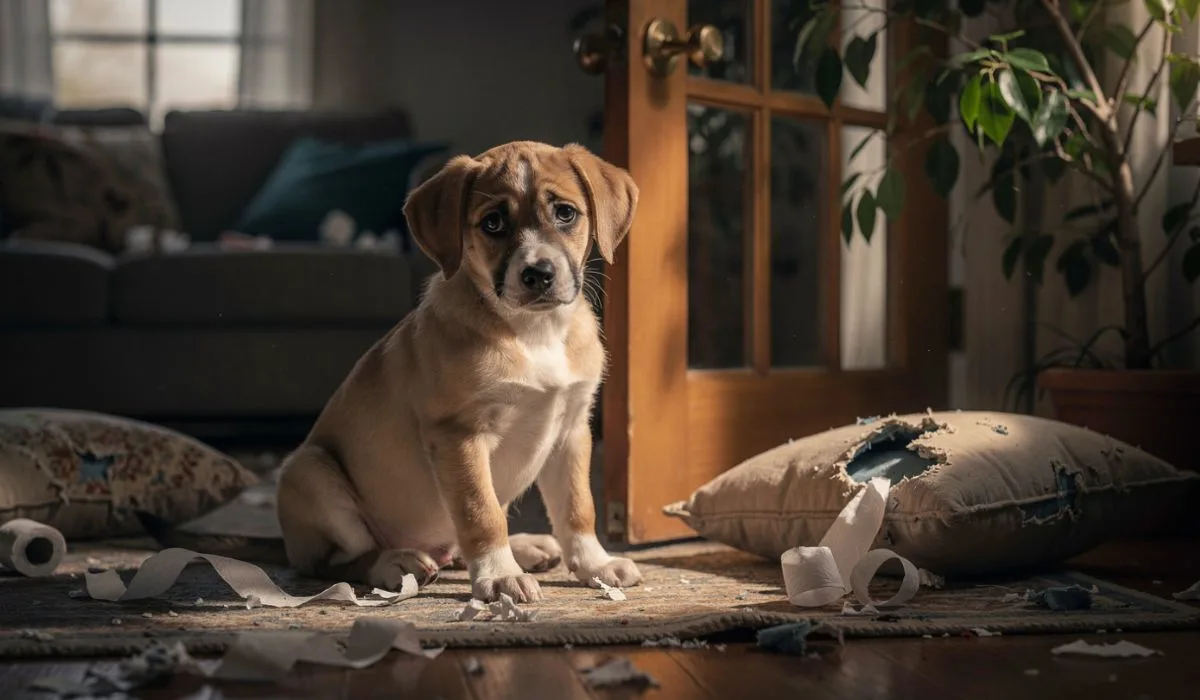
3. Destructive Chewing and Damage
Puppies explore the world using their mouths. When bored or anxious, chewing becomes a coping mechanism.
If left alone too long, puppies may chew:
- Furniture
- Shoes
- Carpets
- Electrical wires
- Walls or doors
This is not just expensive—it can also be dangerous. Chewing electrical cords, for example, can cause injury or even death.
Destructive chewing often increases with boredom and stress.
4. Emotional Stress and Fear
Long periods of isolation can cause emotional distress in puppies.
Signs of stress include:
- Restlessness
- Trembling or pacing
- Excessive barking
- Loss of appetite after you return
- Clinginess
Puppies do not understand why they are alone. Over time, they may start associating alone time with fear instead of normal routine.
5. Delayed Social Development
The first few months of a puppy’s life are extremely important for socialization.
When puppies are left alone too often or for too long:
- They miss out on human interaction
- They may not learn proper behavior cues
- They can become overly shy or fearful
- They may struggle with other dogs later
Proper socialization helps puppies grow into confident adult dogs. Lack of interaction can affect behavior permanently.
6. Increased Risk of Accidents and Injury
Leaving a puppy alone for too long increases the risk of accidents.
Possible dangers include:
- Falling or getting stuck somewhere
- Chewing harmful objects
- Knocking over furniture
- Eating toxic items
- Injuring themselves while playing unsupervised
Puppies are naturally curious but do not understand danger.
Without supervision, even a safe home can become risky.
7. Poor Eating and Drinking Habits
Stress and loneliness can affect a puppy’s eating behavior.
When left alone too long:
- Some puppies refuse to eat
- Others overeat when anxious
- Water may spill or become dirty
- Feeding schedules become inconsistent
This can lead to digestive issues, dehydration, or poor growth in young puppies.
8. Behavioral Problems in the Long Term
One of the biggest concerns is long-term behavior changes.
Puppies left alone too often or too long may develop:
- Aggression or fear-based reactions
- Excessive barking habits
- Attention-seeking behavior
- Hyperactivity when you return
- Difficulty staying calm
These behaviors often continue into adulthood if not corrected early.
9. Sleep and Routine Disruption
Puppies need structured routines to feel safe.
Too much alone time can disrupt:
- Sleep cycles
- Feeding schedules
- Potty routines
A confused routine can make puppies anxious and unpredictable.
10. Slower Training Progress Overall
Training a puppy requires consistency.
Long alone periods can affect:
- Potty training
- Basic commands
- Crate training
- Social behavior learning
Without consistent guidance, puppies may take much longer to learn good habits.
Why Puppies React So Strongly:
It’s important to understand that puppies are not “misbehaving” when they react badly to being alone.
They are:
- Instinctively social
- Emotionally dependent
- Still developing brain function
- Learning how to handle the world
Their reactions are natural responses to stress and confusion.
Read Next: Feed Dog Once A Day Morning Or Evening | Best Time Explained
How to Prevent Problems When You’re Busy:
If you cannot be with your puppy all day, there are safe solutions.
1. Gradual Alone-Time Training
Start slowly:
- 5–10 minutes alone
- Increase gradually
- Reward calm behavior
This helps puppies learn independence safely.
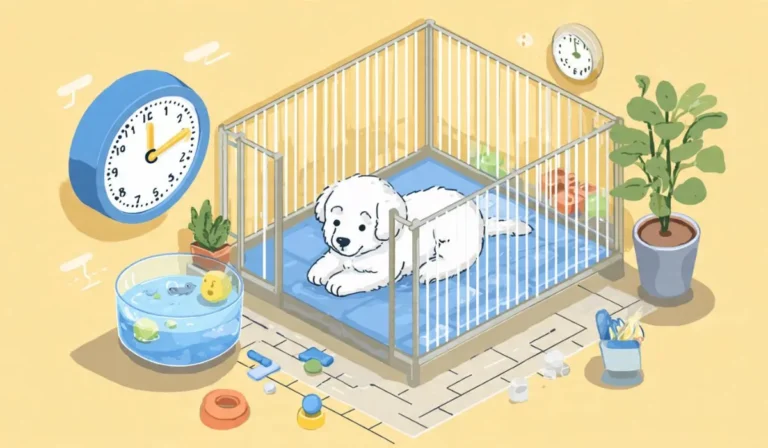
2. Crate Training (Properly Used)
A crate can help create a safe space.
Benefits:
- Prevents accidents
- Reduces destructive behavior
- Provides security
But crates should never be used for long hours.
3. Puppy Sitters or Family Help
If you’re away:
- Ask someone to visit
- Let the puppy out for potty breaks
- Provide playtime
This breaks up long isolation periods.
4. Puppy Daycare
Dog daycare offers:
- Supervision
- Social interaction
- Exercise
- Mental stimulation
It is especially helpful for energetic breeds.
5. Safe Environment Setup
Before leaving:
- Remove dangerous objects
- Provide toys
- Ensure access to water
- Create a safe room
Signs Your Puppy Is Being Left Alone Too Much:
Watch for these warning signs:
- Constant barking when alone
- Destroyed furniture or objects
- Frequent accidents indoors
- Fear or clinginess when you return
- Loss of appetite
- Hyperactivity after isolation
If you notice these signs, it’s time to reduce alone time or seek help.
Final Thoughts:
So, what happens if you leave a puppy alone for too long?
The answer is simple: it can affect nearly every part of their development—emotionally, behaviorally, and physically. Puppies are not designed to handle long periods of isolation. They need attention, structure, and care to grow into healthy adult dogs.
While short alone periods are necessary for training independence, long or frequent isolation can lead to:
- Separation anxiety
- Behavioral issues
- Training delays
- Emotional stress
- Safety risks
The good news is that all of these problems are preventable with proper planning.
If you are a busy owner, the key is not avoiding alone time completely—but managing it correctly with training, support, and safe alternatives.
A well-cared-for puppy grows into a confident, happy, and well-behaved dog—and that begins with understanding their limits early.
FAQs:
1. What happens if I leave my puppy alone for too long?
They may develop separation anxiety, have indoor accidents, chew furniture, become stressed, and struggle with training.
2. How long is too long to leave a puppy alone?
For most puppies, anything beyond 3–6 hours (depending on age) is too long. Very young puppies need much shorter periods.
3. Can leaving a puppy alone cause separation anxiety?
Yes. Repeated long periods alone can lead to anxiety, fear of being left, and clingy behavior.
4. Will my puppy become aggressive if left alone too much?
Not directly aggressive, but they may develop fear-based behaviors, frustration, or destructive habits over time.
5. Why does my puppy destroy things when I leave?
It’s usually due to boredom, stress, or lack of training. Puppies use chewing as a way to cope with emotions.
6. Can my puppy forget potty training if left alone too long?
Yes. Frequent indoor accidents can slow down training and confuse your puppy about where to go.
7. Is it okay to leave a puppy alone while I go to work?
Only if the puppy is older and you arrange help like a sitter, daycare, or mid-day visits for younger puppies.
8. How can I reduce the negative effects of leaving my puppy alone?
Use gradual alone-time training, provide toys, crate train properly, and ensure regular check-ins or support when you’re away.